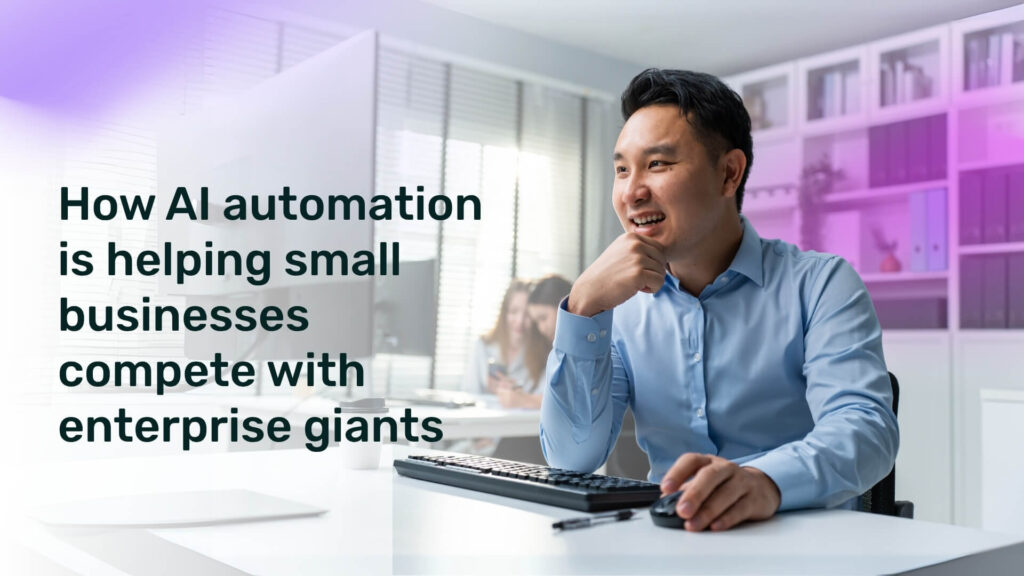

AI employee automation refers to the use of artificial intelligence-powered agents to handle tasks traditionally managed by human employees. These AI agents can perform a wide variety of tasks, from customer service and sales to HR functions such as recruiting, onboarding, and payroll. By using AI to automate these tasks, businesses can save time, reduce costs, and improve the overall employee experience.
The benefits of AI automation in HR
Increased efficiency in HR processes
AI-powered systems can automate a wide range of HR tasks, including resume screening, interview scheduling, benefits enrollment, and payroll processing. This reduces the time and effort required by HR professionals, allowing them to focus on higher-value tasks, such as employee engagement and strategic planning.
AI-driven automation makes it easier for HR professionals to focus on the most important aspects of employee management and company development. For example, by automating the process of onboarding new employees, AI can ensure the paperwork is completed faster and more accurately, helping new hires settle in quicker.
Cost reduction and resource optimization
AI automation helps HR departments save on labor costs by reducing the need for human intervention in routine tasks. By streamlining processes like payroll, benefits administration, and onboarding, businesses can allocate resources more effectively, resulting in cost savings and more efficient HR operations.
Automating HR tasks can also reduce the risk of human error, ensuring that the information processed is accurate, and helping businesses avoid costly mistakes. This leads to improved financial efficiency as HR teams can focus their time on strategic initiatives rather than administrative work.

Improved accuracy and compliance
With AI-powered automation, HR departments can ensure greater accuracy in their processes. For example, AI can automatically verify employee benefits eligibility, flag inconsistencies in payroll data, and ensure that all required forms and documents are completed correctly.
AI systems can track the latest regulations and compliance requirements, so businesses can be assured that their HR processes are aligned with industry laws. Automation of routine tasks helps mitigate the risks of human error, particularly with tasks that involve sensitive data, ensuring a higher level of accuracy in every process.
How AI automation enhances employee satisfaction
Faster onboarding and seamless integration
A smooth onboarding process is essential for new hires to feel welcomed and prepared. AI can streamline the onboarding process by automating document management, training schedules, and policy review, allowing HR teams to deliver a faster and more efficient experience for new employees.
AI systems can automatically guide new hires through the necessary paperwork, provide access to relevant training materials, and answer frequently asked questions in real time. This seamless process enables employees to feel more confident in their roles and helps them get up to speed faster, boosting their satisfaction from day one.
Personalized employee experiences
Employees today expect personalized experiences, especially when it comes to their benefits and career development. AI automation can tailor HR services to the specific needs and preferences of each employee, making HR processes more relevant and engaging.
For example, AI can analyze employee data to offer customized benefits packages that best suit individual needs, improving overall employee satisfaction. AI can also personalize performance reviews by providing feedback based on specific employee goals and achievements, offering a more meaningful and constructive evaluation process.
24/7 accessibility for employee support
Employees often have questions regarding HR processes, such as benefits enrollment, leave policies, or payroll. With AI automation, employees can get instant answers to these questions at any time, without needing to wait for HR representatives to become available.
AI chatbots and virtual assistants can respond to employee queries 24/7, offering immediate assistance and freeing up HR staff to focus on more complex tasks. This increased accessibility helps create a more responsive HR experience and enhances employee satisfaction by providing the support they need, when they need it.
How to get started with AI automation in HR
Identify key processes to automate
The first step to implementing AI in HR is identifying which tasks can benefit from automation. Common tasks to start with include resume screening, interview scheduling, employee data management, benefits administration, and payroll processing.
Choose the right AI platform
Selecting an AI platform that integrates seamlessly with your existing HR systems is essential for a smooth transition. A solution like 365Agents can provide customized workflows and pre-built AI agents designed to handle HR tasks effectively, from recruiting to employee management.

Customization and integration
AI solutions can be tailored to fit your business’s unique HR needs. Integrating the AI platform with your current systems (like CRM and payroll) ensures that your automation workflows are accurate and aligned with your existing data. The more you tailor AI automation to your business, the greater the benefits will be.
Ongoing monitoring and optimization
Once implemented, it’s crucial to monitor and continually optimize your AI automation processes. Gathering feedback from HR staff and employees ensures the system is meeting your needs. Over time, your AI system will learn from past interactions, improving its effectiveness and efficiency.
By adopting AI automation, businesses can streamline HR processes, save time, and improve employee satisfaction. AI-powered systems make HR departments more efficient, cost-effective, and capable of delivering a personalized employee experience.
Request a demo of 365Agents today to see how AI automation can transform your HR functions, improve operational efficiency, and enhance employee engagement.