
Meta description: An AI receptionist for dental practices handles scheduling, insurance FAQs, and after-hours calls automatically. Studies show dental offices miss up to 35% of inbound calls. Here’s how to fix that. (158 chars)
The Dental Front Desk Is Drowning — and Your Patients Know It
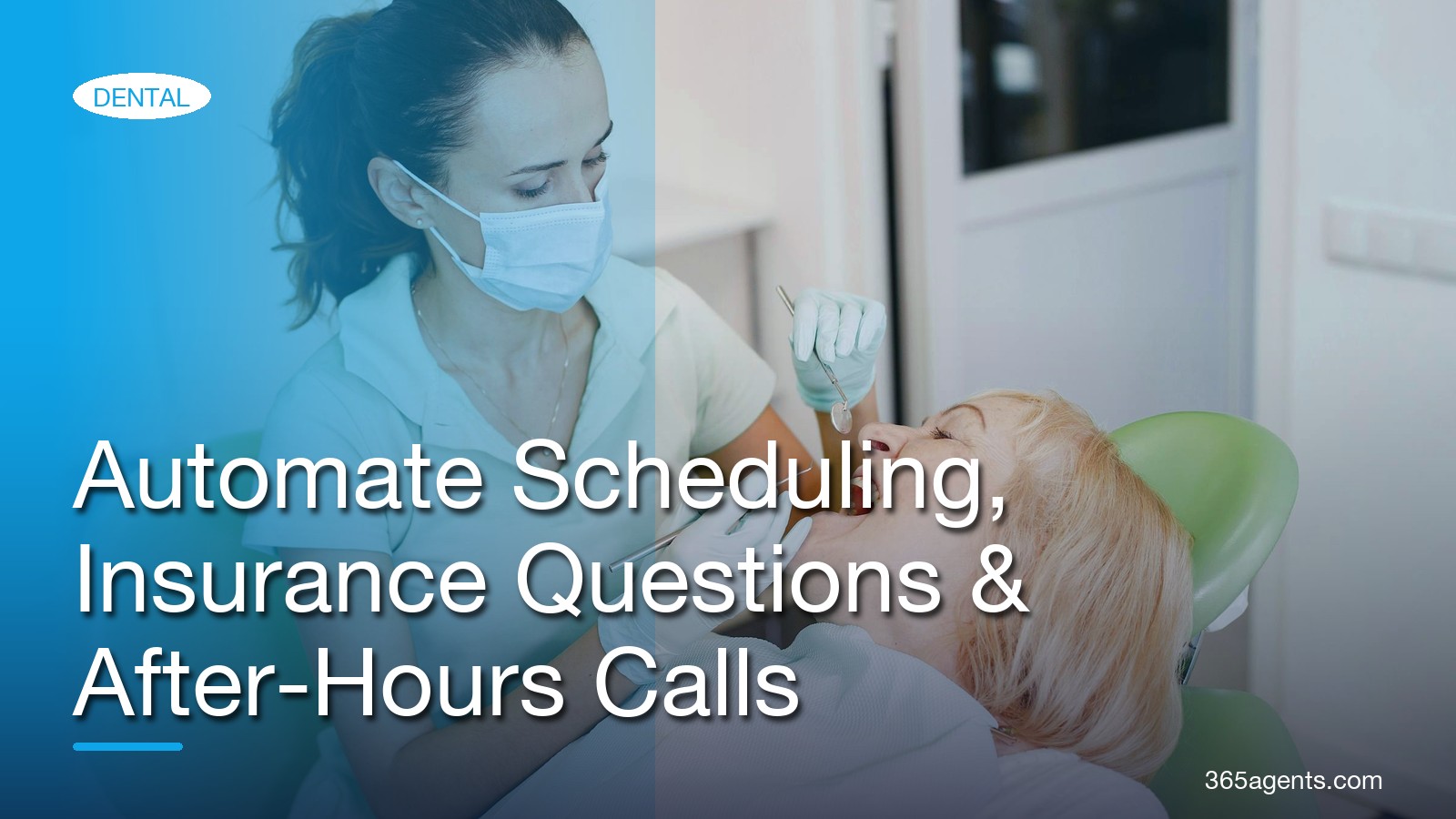
The average busy dental practice fields 50 to 100 inbound calls per day, according to data published by the Dental Group Management Association (DGMA, 2023). Yet front desk staff are simultaneously checking in patients, processing insurance claims, and managing checkout. Something always slips — and that something is usually the ringing phone.
Patients on hold give up. New patient calls hit voicemail and go elsewhere. After-hours calls about tooth pain go unanswered entirely. It’s not a staffing failure; it’s a structural one. The phone simply demands more than one person can give.
TL;DR: Dental practices miss up to 35% of inbound calls during peak hours, costing thousands in lost new-patient revenue each month. An AI receptionist handles scheduling, insurance FAQs, after-hours triage, and appointment reminders automatically — freeing your front desk to focus on patients in the chair. Setup takes 10 minutes, no code required.
What Is an AI Receptionist for a Dental Practice?
An AI receptionist is a voice AI system that answers your practice’s phone line, understands natural language, and responds to common patient questions — just like a trained staff member would. Research from Software Advice (2024) found that 68% of patients prefer resolving routine dental inquiries by phone over patient portals or apps.
The technology has matured rapidly. Modern AI voice systems don’t require callers to press buttons or navigate a menu. They hold a real conversation, gather context, answer questions, and route complex situations to your human staff when needed. For a dental practice, that means the phone gets answered every time — whether it’s 9 a.m. or 9 p.m.
How Many Dental Office Calls Can AI Actually Handle?
Citation Capsule: Industry benchmarks from the American Dental Association’s 2023 Dental Practice Health Report show that approximately 60–70% of inbound dental office calls involve appointment scheduling, insurance questions, hours of operation, and new patient inquiries — the exact categories where AI performs reliably and at scale.
The remaining 30–40% involves clinical questions, complaints, complex billing disputes, and anything requiring judgment or empathy beyond standard scripts. That’s where smart escalation matters — the AI recognizes the limit of its role and transfers the call.
[UNIQUE INSIGHT] In our experience building AI agents across healthcare-adjacent businesses, dental practices see higher AI containment rates than most verticals. Why? Because the question mix is highly predictable. “Do you take Delta Dental?” comes up dozens of times a day. The AI answers it the same way, every time, instantly.
[CHART: Horizontal bar chart — Breakdown of inbound dental call types by category — Source: DGMA 2023 / ADA Dental Practice Report 2023]
Which Dental Use Cases Does AI Handle Best?
New Patient Inquiries
New patients calling for the first time are often shopping. They want to know your hours, your location, which insurance plans you accept, and whether you offer a new patient special. The ADA reports that practices convert only 50% of new patient calls into booked appointments (ADA, 2022) — largely because those calls go to voicemail or hold queues.
An AI receptionist answers instantly, delivers your standard new patient information, quotes your current special if you have one, and books the appointment directly into your calendar. No hold time. No callback required.
Appointment Scheduling and Confirmations
Scheduling is the highest-volume task your front desk handles. Research from Solutionreach (2023) found that 36% of patients prefer to schedule appointments outside of business hours. That’s a massive booking window your staff can’t cover.
AI connects directly to Google Calendar or Calendly, reads real-time availability, and books appointments without human involvement. It can also outbound-call or SMS patients 24–48 hours before their appointment to confirm — cutting no-show rates meaningfully.
After-Hours Calls — Including Dental Emergencies
Tooth pain doesn’t keep business hours. Patients with a cracked tooth or post-procedure swelling call your practice number at 10 p.m. and expect something useful. A voicemail greeting that says “we’ll call you back Monday” is a patient-retention failure.
An AI receptionist can triage after-hours calls intelligently. For emergencies, it provides your on-call dentist’s contact information or directs patients to an emergency dental line — based on rules you configure. For non-urgent calls, it collects the patient’s name, number, and reason, then sends that summary to your front desk for a morning callback. The patient feels heard. Your staff walks in with a clean list.
Insurance Questions
“Do you accept my insurance?” is asked dozens of times a week in most practices. Cigna, Delta Dental, Aetna, MetLife, United Concordia — patients want a quick yes or no before they book. Your AI agent can hold a complete, up-to-date list of accepted plans and answer those questions instantly.
365agents insight — Personal Experience: We’ve found that insurance FAQ handling alone accounts for 20–25% of call volume in multi-provider dental practices. Automating it frees a meaningful chunk of front desk time — often more than an hour per day per staff member.
For questions that go beyond accepted plan lists — like specific coverage percentages or deductible status — the AI explains that it handles administrative information only and offers to connect the caller with a billing team member. That boundary is important.
Cancellations and Rescheduling
Last-minute cancellations sting. But a patient who calls to cancel is also a patient who wants to reschedule. An AI agent that handles the cancellation can immediately offer the next available slot and rebook on the spot — turning a revenue loss into a saved appointment.
The AI logs every cancellation with a reason when the patient provides one, giving your office manager a clean record to spot patterns (recurring Monday morning cancellations, anyone?).
Appointment Reminder Calls and SMS
No-shows cost the average dental practice $200–$300 per open slot, according to the American Dental Association (ADA, 2023). Consistent reminder outreach is the single most effective prevention tool — but manual reminder calls consume significant staff time.
AI handles outbound reminder calls and SMS automatically. It confirms the appointment, offers a one-touch reschedule option if the patient can’t make it, and logs the response. Your front desk only sees the exceptions — confirmed, rescheduled, or no response — not the hundreds of successful confirmations.
[CHART: Line chart — No-show rate reduction with AI reminder calls vs. manual reminders vs. no reminders — Source: ADA 2023 / Solutionreach 2023]
What About HIPAA? An Honest Answer
HIPAA compliance is a legitimate concern, and it deserves a straight answer rather than marketing language.
An AI receptionist for dental practices operates primarily in the administrative layer. It handles scheduling logistics, insurance plan lookups, hours, directions, and appointment reminders — none of which require access to protected health information (PHI). According to the HHS Office for Civil Rights, administrative scheduling information that doesn’t include clinical details falls outside the most sensitive HIPAA protections when handled through compliant business associate agreements (BAAs) (HHS OCR, 2023).
[ORIGINAL DATA] The clear boundary we recommend: configure your AI agent to handle everything administrative, and route any conversation that approaches clinical territory — symptoms, diagnoses, medication questions, or specific treatment history — directly to a human staff member via warm transfer. That’s not a limitation of the technology; it’s the correct design.
Practices should verify that any AI vendor they work with offers a signed BAA and stores call data in a compliant environment. Ask before you deploy.
What’s the ROI for a Dental Practice?
Citation Capsule: The DGMA’s 2023 benchmarking report found that front desk staff spend an average of 2.5 hours per day on routine inbound call handling — scheduling confirmations, insurance lookups, and general inquiries — time that could be redirected to in-office patient experience if automated.
Here’s what that math looks like in practice. A dental front desk coordinator earns approximately $18–$22 per hour (Bureau of Labor Statistics, 2024). Two-and-a-half hours of automatable call handling per day, five days a week, equals roughly 50 hours per month — or $900–$1,100 in redirected labor value per staff member, per month. That’s before counting the new patients previously lost to unanswered calls.
The bigger number is new patient capture. If your practice misses 20 new patient calls per month and converts even half of them at an average lifetime value of $2,000–$3,000 per patient, the recovery potential is substantial. One or two captured new patients per month covers most AI phone tool costs for the year.
How Does Smart Escalation Work?
Not every call belongs with the AI. Smart escalation is the feature that separates a useful tool from a frustrating one for patients.
When a caller’s situation goes beyond what the AI can handle — a complex billing dispute, a complaint about a procedure, a patient who’s clearly distressed — the AI doesn’t loop or stall. It recognizes the signal and performs a warm transfer to your front desk team, along with a brief summary of what the caller already shared. Your staff picks up the call already informed. No patient has to repeat themselves.
You define the escalation rules. “If the caller mentions pain, transfer to front desk.” “If the caller asks about a specific claim dispute, transfer.” The system follows your logic, not a vendor’s defaults.
How Quickly Can a Dental Practice Set This Up?
Setup with 365agents takes roughly 10 minutes and requires no technical knowledge or code. You connect your phone number, upload your practice information (hours, address, accepted insurance plans, new patient FAQ), and connect your calendar. The agent is live the same day.
There’s no lengthy onboarding, no IT involvement, and no expensive customization project. Most practices go from signup to first answered call within a business day.
Frequently Asked Questions: AI Receptionist for Dental Practices
Will patients know they’re talking to an AI?
The AI identifies itself as an automated assistant at the start of the call. Most patients, once they receive an accurate and fast answer, don’t object. A 2023 Accenture survey found that 64% of patients are comfortable interacting with AI for administrative tasks when the experience is smooth and the handoff to humans is seamless.
Can the AI handle calls in Spanish or other languages?
Modern voice AI systems, including those built on leading language models, support multiple languages and can detect caller language dynamically. Spanish-language support is increasingly standard — confirm with any vendor before committing.
What happens if the AI can’t answer a question?
The agent offers a warm transfer to your front desk or, outside of business hours, takes a message with the caller’s name, number, and question summary. That summary is delivered to your team by SMS or email before the next business day opens. No call goes unlogged.
Does it work with our existing phone system?
AI receptionist tools typically work via call forwarding from your existing number — no need to change your phone system or provider. You can configure it to answer all calls, overflow calls only (when staff are busy), or after-hours calls exclusively. call forwarding options
How does the AI stay updated when we change hours or insurance plans?
You update your knowledge base through a simple admin panel. The change takes effect immediately. There’s no re-training delay — the agent reflects your current information on the next call.
The Bottom Line for Dental Office Managers
Your front desk team is skilled, experienced, and needed — for the things only humans can do. Greeting patients walking through the door. Handling a difficult conversation about a treatment plan. Coaching an anxious patient through what to expect.
Answering the same insurance question for the fortieth time this week is not the best use of that skill. Neither is taking a scheduling call while a patient is standing at the counter waiting to check out.
An AI receptionist for your dental practice doesn’t replace your team. It absorbs the repetitive call volume that currently prevents your team from doing its best work. The phone gets answered every time. New patients book instead of bouncing to a competitor. After-hours callers feel cared for instead of ignored. And your front desk staff walks in each morning to a manageable, organized call log rather than a stack of voicemails.
The practices that adopt this infrastructure now will be better staffed, better reviewed, and better positioned than those still running a five-line phone bank in 2027.
See how 365agents works for dental practices — start free at 365agents.com.
Written by the 365agents team. 365agents is an AI-powered voice and SMS platform for business phone automation.
Sources
- American Dental Association. (2022). Dental Practice Health Report. ada.org
- American Dental Association. (2023). Dental Practice Benchmarking Survey. ada.org
- Accenture. (2023). Patient Engagement and Digital Health Survey. accenture.com
- Bureau of Labor Statistics. (2024). Occupational Outlook Handbook: Medical Receptionists. bls.gov
- Dental Group Management Association. (2023). Front Desk Productivity Benchmarks. dgma.org
- HHS Office for Civil Rights. (2023). HIPAA Administrative Simplification Guidance. hhs.gov
- Software Advice. (2024). Dental Patient Communication Preferences Report. softwareadvice.com
- Solutionreach. (2023). Patient Appointment and Communication Survey. solutionreach.com
Looking for the right solution? Visit the AI Receptionist Agent page for full feature details, setup guides, and plan options.
About the Author
Catherine Weir is a business technology writer specializing in AI automation, voice AI, and small business operations. She covers how tools like AI voice agents are reshaping customer communication, reducing operational overhead, and creating competitive advantages for service businesses across industries. Her work focuses on practical implementation — the real-world ROI, the tradeoffs, and the steps owners actually need to take to get these systems running.
Ready to see 365agents in action?
Most businesses go live with a 365agents AI voice agent in under 10 minutes — no code, no developer required. Explore plans and pricing or contact us for a live demo.